Loading...

0
0
Propiedades
Tipo específico:
Tipo:
http://schema.org/name
Premio
Award
http://www.w3.org/1999/02/22-rdf-syntax-ns#type
http://dbpedia.org/ontology/DataType
http://schema.org/name
Cosa
Thing
http://www.w3.org/1999/02/22-rdf-syntax-ns#type
http://dbpedia.org/ontology/DataType
Fecha de fin:
01/01/2021
Relevancia:
7
Same As:
https://en.wikipedia.org/wiki/David_MacMillan
Descripción:
Premio Nobel de Química
Imagen:
http://commons.wikimedia.org/wiki/Special:FilePath/David%20MacMillan.jpg?width=200
Fecha de inicio:
01/01/2021
Descripción larga:
Sir David William Cross MacMillan (born 16 March 1968) is a Scottish chemist and the James S. McDonnell Distinguished University Professor of Chemistry at Princeton University, where he was also the chair of the Department of Chemistry from 2010 to 2015. He shared the 2021 Nobel Prize in Chemistry with Benjamin List "for the development of asymmetric organocatalysis".
Identificador:
Q5237001
Nombre:
David MacMillan
Descripción larga de wikipedia :
Sir David William Cross MacMillan (born 16 March 1968) is a Scottish chemist and the James S. McDonnell Distinguished University Professor of Chemistry at Princeton University, where he was also the chair of the Department of Chemistry from 2010 to 2015. He shared the 2021 Nobel Prize in Chemistry with Benjamin List "for the development of asymmetric organocatalysis".<br /><br /><br />== Education and early life ==<br />MacMillan was born in Bellshill, North Lanarkshire, Scotland, in 1968 and grew up in nearby New Stevenston. He attended the local state-funded schools, New Stevenston Primary and Bellshill Academy, and credited his Scottish education and Scottish upbringing for his success.He received his undergraduate degree in chemistry at the University of Glasgow, where he worked with Ernie Colvin.In 1990, he left the UK to begin his doctoral studies under the direction of Professor Larry Overman at the University of California, Irvine. During this time, he focused on the development of new reaction methodology directed toward the stereocontrolled formation of bicyclic tetrahydrofurans. MacMillan's graduate studies culminated in the total synthesis of 7-(−)-deacetoxyalcyonin acetate, a eunicellin diterpenoid isolated from the soft coral Eunicella stricta. He earned his Ph.D. in 1996.<br /><br /><br />== Career and research ==<br />Upon receiving his Ph.D., MacMillan accepted a position with Professor David Evans at Harvard University. His postdoctoral studies centered on enantioselective catalysis, in particular, the design and development of Sn(II)-derived bisoxazoline complexes (Sn(II)box).MacMillan began his independent research career as a member of the chemistry faculty at the University of California, Berkeley in July 1998. He joined the department of chemistry at Caltech in June 2000, where his group's research interests centered on new approaches to enantioselective catalysis. In 2004, he was appointed as the Earle C. Anthony Professor of Chemistry. He became the James S. McDonnell Distinguished University Professor at Princeton University in September 2006.<br /><br />He is considered to be one of the founders of organocatalysis. In 2000, MacMillan designed small organic molecules that can provide or accept electrons and therefore efficiently catalyse reactions. He developed catalysts that can drive asymmetric catalysis, in which a reaction produces more of the left-handed version of a molecule than the right-handed one (chirality), or vice versa. MacMillan's research group has made many advances in the field of asymmetric organocatalysis, and they have applied these new methods to the synthesis of a range of complex natural products. He developed chiral imidazolidinone catalysts. MacMillan catalysts are used in various asymmetric syntheses. Examples include Diels-Alder reactions, 1,3-dipolar cycloadditions, Friedel-Crafts alkylations or Michael additions.MacMillan has also extensively developed photoredox catalysis for use in organic synthesis.Between 2010 and 2014, MacMillan was the founding editor-in-chief of the journal Chemical Science, the flagship general chemistry journal published by the Royal Society of Chemistry.As of 2021, MacMillan has an h-index of 110 according to Google Scholar and of 100 according to Scopus.<br /><br /><br />== Honours and awards ==<br />MacMillan was knighted in the 2022 Birthday Honours for services to chemistry and science.<br />2002 Sloan Research Fellowship<br />2004 Corday-Morgan medal of Royal Institute of Chemistry<br />2012 Elected a Fellow of the Royal Society (FRS)<br />2012 Elected as a member of the American Academy of Arts and Sciences<br />2013 Elected a Corresponding Fellow of the Royal Society of Edinburgh (FRSE)<br />2015 Harrison Howe Award<br />2017 Ryoji Noyori Prize<br />2018 Elected a member of the National Academy of Sciences<br />2021 Nobel Prize in Chemistry<br /><br /><br />== List ==<br />List of Nobel laureates affiliated with Princeton University<br />List of Nobel laureates<br /><br /><br />== References ==<br /><br /><br />== External links ==<br /><br />David MacMillan on Nobelprize.org <br />David MacMillan publications indexed by Google Scholar
Nombre alternativo:
David MacMillan
Mostrar en timeline:
Yes

Schedule
Tuesday to Saturday: from 11 to 20 h.
Sundays and holidays: from 11 to 15 h.
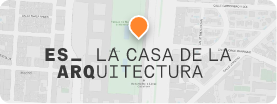
La Arquería de Nuevos Ministerios
Paseo de la Castellana, 67
28046 Madrid - España

Horario
Martes a sábado: de 11 a 20 h.
Domingos y festivos: de 11 a 15 h.
La Arquería de Nuevos Ministerios
Paseo de la Castellana, 67
28046 Madrid - España

Design

Powered by

Copyright © 2026. All rights reserved.