Loading...

0
0
Propiedades
Tipo específico:
Tipo:
http://schema.org/name
Historical period
Periodo histórico
http://www.w3.org/1999/02/22-rdf-syntax-ns#type
http://dbpedia.org/ontology/DataType
http://schema.org/name
Cosa
Thing
http://www.w3.org/1999/02/22-rdf-syntax-ns#type
http://dbpedia.org/ontology/DataType
Fecha de fin:
31/12/1941
Relevancia:
21
Same As:
https://en.wikipedia.org/wiki/Frederic_Kipping
Fecha de inicio:
31/12/1941
Descripción larga:
Frederic Stanley Kipping FRS (16 August 1863 – 1 May 1949) was an English chemist. He undertook much of the pioneering work on silicon polymers and coined the term silicone.
Identificador:
Q1452753
Nombre:
Frederick Kipping
Descripción larga de wikipedia :
Frederic Stanley Kipping FRS (16 August 1863 – 1 May 1949) was an English chemist. He undertook much of the pioneering work on silicon polymers and coined the term silicone.<br /><br /><br />== Life ==<br />He was born in Salford, Lancashire, England, the son of James Kipping, a Bank of England official, and Julia Du Val, a daughter of painter Charles Allen Du Val. He was educated at Manchester Grammar School before enrolling in 1879 at Owens College (now Manchester University) for an external degree from the University of London. After working for the local gas company for a short time he went in 1886 to Germany to work under William Henry Perkin, Jr. in the laboratories of Adolf von Baeyer at Munich University.<br />Back in England, he took a position as demonstrator for Perkin, who had been appointed professor at Heriot-Watt College, Edinburgh. In 1890, Kipping was appointed chief demonstrator in chemistry for the City and Guilds of London Institute, where he worked for the chemist Henry Edward Armstrong. In 1897 he moved to University College, Nottingham as professor of the chemistry department, and became the first newly endowed Sir Jesse Boot professor of chemistry at the university in 1928. He remained there until his retirement in 1936.<br /><br /><br />== Achievements ==<br />Kipping undertook much of the pioneering work into the development of silicon polymers (silicones) at Nottingham. He pioneered the study of the organic compounds of silicon (organosilicon) and coined the term silicone. His research formed the basis for the worldwide development of the synthetic rubber and silicone-based lubricant industries. He also co-wrote, with Perkin, a standard textbook on organic chemistry (Organic Chemistry, Perkin and Kipping, 1894).<br />He was awarded the Longstaff Medal (now Longstaff Prize) by the Chemistry Society (now Royal Society of Chemistry) in 1909.<br />He was elected a Fellow of the Royal Society in June, 1897. He was awarded their Davy Medal in 1918 and delivered their Bakerian Lecture in 1936 and was awarded a Royal Society Bakerian Medal in the same year.<br />In 2004, he was inducted into the University of Akron's International Rubber Science Hall of Fame.<br /><br /><br />== Family ==<br />He retired in 1936 and died in Criccieth, Wales. He married Lilian Holland in 1888, one of three sisters, and both his brothers-in-law were eminent scientists themselves: Arthur Lapworth and William Henry Perkin, Jr. He had four children including Cyril Henry Stanley, who became a famous chess player and headmaster of Wednesbury Boys School, and Frederick Barry who was eminent in chemistry and later edited his father's Organic Chemistry textbook.<br /><br /><br />== See also ==<br /><br /><br />== References ==<br /><br /><br />== External links ==<br />Biography of Frederic Kipping
Nombre alternativo:
Frederic Stanley Kipping
F. Stanley Kipping
Stanley Kipping
Frederick Stanley Kipping
Frederick Kipping
Mostrar en timeline:
Yes

Schedule
Tuesday to Saturday: from 11 to 20 h.
Sundays and holidays: from 11 to 15 h.
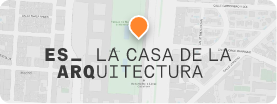
La Arquería de Nuevos Ministerios
Paseo de la Castellana, 67
28046 Madrid - España


Horario
Martes a sábado: de 11 a 20 h.
Domingos y festivos: de 11 a 15 h.
La Arquería de Nuevos Ministerios
Paseo de la Castellana, 67
28046 Madrid - España

Design

Powered by

Copyright © 2026. All rights reserved.