Loading...

0
0
Propiedades
Tipo específico:
Tipo:
http://schema.org/name
Arquitecto
Architect
http://www.w3.org/1999/02/22-rdf-syntax-ns#type
http://dbpedia.org/ontology/DataType
http://schema.org/name
Person
Persona
http://www.w3.org/1999/02/22-rdf-syntax-ns#type
http://dbpedia.org/ontology/DataType
Fecha de fin:
01/01/1975
Relevancia:
37
Same As:
https://en.wikipedia.org/wiki/Michael_Scott_(architect)
Descripción:
RIBA Royal Gold Medal
Imagen:
https://upload.wikimedia.org/wikipedia/commons/thumb/1/10/Busaras.jpg/300px-Busaras.jpg
Fecha de inicio:
01/01/1975
Descripción larga:
Michael Scott (24 June 1905 – 24 January 1989) was an Irish architect whose buildings included the Busáras building in Dublin, Cork Opera House, the Abbey Theatre and both Tullamore and Portlaoise Hospitals.
Identificador:
Q1929336
Nombre:
Michael Scott
Descripción larga de wikipedia :
Michael Scott (24 June 1905 – 24 January 1989) was an Irish architect whose buildings included the Busáras building in Dublin, Cork Opera House, the Abbey Theatre and both Tullamore and Portlaoise Hospitals.<br /><br /><br />== Early life and education ==<br />He was born in Drogheda in 1905. His family originated in the Province of Munster. His father, William Scott, was a school inspector from near Sneem on the Iveragh Peninsula in County Kerry. His mother was from County Cork. Michael was educated at Belvedere College, Dublin.There he first demonstrated his skills at painting and acting. Initially, he wanted to pursue a career as a painter but his father pointed out that it might make more financial sense to become an architect.<br /><br /><br />== Career ==<br /><br />Scott became an apprentice for the sum of £375 per annum to the Dublin architectural firm Jones and Kelly. He remained there from 1923 until 1926, where he studied under Alfred E. Jones. In the evenings after work, he also attended the Metropolitan School of Art and the Abbey School of Acting, and appeared in many plays there until 1927, including the first productions of Seán O'Casey’s (1884-1964) Juno and the Paycock and The Plough and the Stars. On completing his pupilage he became an assistant to Charles James Dunlop and then had a brief spell as an assistant architect in the Office of Public Works.In 1931 he partnered with Norman D. Good to form Scott and Good, and they opened an office in Dublin. Scott and Good’s designed the hospital at Tullamore (1934–37) and Portlaoise General Hospital (1935). Between 1937 and 1938, Scott was the President of the Architectural Association of Ireland (AAI). He founded his company, Michael Scott Architects, in 1938. That same year he also designed his house Geragh, at Sandycove, County Dublin.Scott’s most important pre-war commission was the Irish Pavilion for the New York World Fair in 1938. Scott produced a shamrock-shaped building constructed in steel, concrete, and glass. It was selected by an international jury as the best building in the show. As a result, Scott was presented with a silver medal for distinguished services and given honorary citizenship of the city of New York by the then Mayor Fiorello La Guardia. Other better-known architects who designed national pavilions for this World Fair included Alvar Aalto of Finland and Oscar Niemeyer (born 1907) of Brazil.Scott had three major commissions from the Córas Iompair Éireann CIÉ, the Inchicore Chassis Works, the Donnybrook Bus Garage (1952) and, most famously, the Dublin Central Bus Station, to be known as àras Mhic Dhiarmada or Busáras. Though initially controversial, Busáras was to win Scott the Royal Institute of Architects of Ireland Triennial Gold Medal for Architecture.Scott was the founder of Rosc and the chairman of the board for many years. Rosc '67 was a large, first of its kind, Irish art exhibition which showed historic treasures from Irish history alongside hundreds of contemporary artworks. The Rosc series of exhibitions continued for 21 years.Later, Ronnie Tallon and Robin Walker became partners, and the firm was renamed Scott Tallon Walker in 1975, shortly after the firm won the RIBA Royal Gold Medal. Scott, who spent most of his life living at Sandycove Point, just south of Dún Laoghaire in south Dublin, was buried near Sneem in County Kerry.<br /><br /><br />== Works ==<br />1938–9 Irish Pavilion, New York World's Fair, New York<br />1945–53 Busaras, Store Street, Dublin<br />1946–8 Chassis factory, Inchicore<br />1946–51 Bus garage at Donnybrook<br />Conway House East wall road Dublin 3 one piece staircase<br /><br /><br />== References ==<br /><br /><br />== External links ==<br />Michael Scott at RTE's Ireland's Millennia People<br />Dictionary of Irish Architects 1720 - 1940
Nombre alternativo:
Michael Scott
Mostrar en timeline:
Yes

Schedule
Tuesday to Saturday: from 11 to 20 h.
Sundays and holidays: from 11 to 15 h.
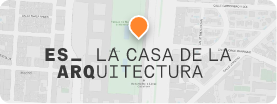
La Arquería de Nuevos Ministerios
Paseo de la Castellana, 67
28046 Madrid - España

Horario
Martes a sábado: de 11 a 20 h.
Domingos y festivos: de 11 a 15 h.
La Arquería de Nuevos Ministerios
Paseo de la Castellana, 67
28046 Madrid - España

Design

Powered by

Copyright © 2026. All rights reserved.