Loading...

0
0
Propiedades
Tipo específico:
Tipo:
http://schema.org/name
Premio
Award
http://www.w3.org/1999/02/22-rdf-syntax-ns#type
http://dbpedia.org/ontology/DataType
http://schema.org/name
Cosa
Thing
http://www.w3.org/1999/02/22-rdf-syntax-ns#type
http://dbpedia.org/ontology/DataType
Fecha de fin:
01/01/2015
Relevancia:
39
Same As:
https://en.wikipedia.org/wiki/Takaaki_Kajita
Descripción:
Premio Nobel de Física
Imagen:
http://commons.wikimedia.org/wiki/Special:FilePath/Takaaki%20Kajita%20cropped%201%20Takaaki%20Kajita%20202010.jpg?width=200
Fecha de inicio:
01/01/2015
Descripción larga:
Takaaki Kajita (梶田 隆章, Kajita Takaaki, Japanese pronunciation: [kadʑita takaːki]; born 9 March 1959) is a Japanese physicist, known for neutrino experiments at the Kamioka Observatory – Kamiokande and its successor, Super-Kamiokande. In 2015, he was awarded the Nobel Prize in Physics jointly with Canadian physicist Arthur B. McDonald. On 1 October 2020, he became the president of the Science Council of Japan.
Identificador:
Q11538917
Nombre:
Takaaki Kajita
Descripción larga de wikipedia :
Takaaki Kajita (梶田 隆章, Kajita Takaaki, Japanese pronunciation: [kadʑita takaːki]; born 9 March 1959) is a Japanese physicist, known for neutrino experiments at the Kamioka Observatory – Kamiokande and its successor, Super-Kamiokande. In 2015, he was awarded the Nobel Prize in Physics jointly with Canadian physicist Arthur B. McDonald. On 1 October 2020, he became the president of the Science Council of Japan.<br /><br /><br />== Early life and education ==<br />Kajita was born in 1959 in Higashimatsuyama, Saitama, Japan. He liked studying thought rather than memorizing, especially with interest in physics, biology, world history, Japanese history, and earth science in high school. He studied physics at Saitama University and graduated in 1981. He received his doctorate in 1986 at the University of Tokyo. At the University of Tokyo, he joined Masatoshi Koshiba's research group because neutrinos "seemed like they might be interesting."<br /><br /><br />== Career and research ==<br />Since 1988, Kajita has been at the Institute for Cosmic Radiation Research, University of Tokyo, where he became an assistant professor in 1992 and professor in 1999.He became director of the Center for Cosmic Neutrinos at the Institute for Cosmic Ray Research (ICRR) in 1999. As of 2017, he is a Principal Investigator at the Institute for the Physics and Mathematics of the Universe in Tokyo, and Director of ICRR.In 1998, Kajita's team at the Super-Kamiokande found that when cosmic rays hit the Earth's atmosphere, the resulting neutrinos switched between two flavours before they reached the detector under Mt. Kamioka. This discovery helped prove the existence of neutrino oscillation and that neutrinos have mass. In 2015, Kajita shared the Nobel Prize in Physics with Canadian physicist Arthur McDonald, whose Sudbury Neutrino Observatory discovered similar results. Kajita's and McDonald's work solved the longstanding Solar neutrino problem, which was a major discrepancy between the predicted and measured Solar neutrino fluxes, and indicated that the Standard Model, which required neutrinos to be massless, had weaknesses. In a news conference at the University of Tokyo, shortly after the Nobel announcement, Kajita said, "I want to thank the neutrinos, of course. And since neutrinos are created by cosmic rays, I want to thank them, too."One of the first people Kajita called after receiving the Nobel Prize was 2002 Nobel physics laureate Masatoshi Koshiba, his former mentor and a fellow neutrino researcher.Kajita is currently the principal investigator of another ICRR project located at the Kamioka Observatory, the KAGRA gravitational wave detector.<br /><br /><br />== Recognition ==<br /><br /><br />=== Awards ===<br />1987 – Asahi Prize as part of Kamiokande (Representative – Masatoshi Koshiba)<br />1989 – Bruno Rossi Prize along with the other members of the Kamiokande collaboration<br />1998 – Asahi Prize as part of Super-Kamiokande (Representative – Yoji Totsuka)<br />1999 – Nishina Memorial Prize<br />2002 – Panofsky Prize for compelling experimental evidence for neutrino oscillations using atmospheric neutrinos<br />2010 – Yoji Totsuka Award<br />2012 – Japan Academy Prize for "Discovery of Atmospheric Neutrino Oscillations"<br />2013 – Julius Wess Award for his "significant role in the Discovery of Atmospheric Neutrino Oscillations with the Super-KAMIOKANDE Experiment."<br />2015 – Nobel Prize in Physics jointly with Arthur B. McDonald for the discovery of neutrino oscillations, which shows that neutrinos have mass.<br />2016 – Breakthrough Prize in Fundamental Physics<br /><br /><br />=== Honors ===<br />2015 – Order of Culture, Person of Cultural Merit<br />2016 – Doctorate in Science (DSc), Aligarh Muslim University, India<br />2016 – Honoris Causa Degree, Higher University of San Andrés, La Paz, Bolivia.<br />2017 – Honoris Causa Degree in Physics, University of Naples Federico II<br />2017 – Honoris Causa Degree in Physics, University of Bern<br />2017 – Honoris Causa Degree in Physics, University of Perugia<br /><br /><br />== See also ==<br />List of Japanese Nobel laureates<br />List of Nobel laureates affiliated with the University of Tokyo<br />Masatoshi Koshiba<br />Yoji Totsuka<br /><br /><br />== References ==<br /><br /><br />== External links ==<br />Official website<br />Panofsky Preis<br />Verleihung des Julius Wess Preises 2013 mit Vortrag von Kajita<br />KAGRA, the Latest "Gravitational Wave Telescope" Project, Commences via JST Science News 2012<br />Takaaki Kajita Quotes With Pictures<br />Interview with Takaaki Kajita, on Editage Insights: In my days, nobody felt rushed just because research was making slow progress<br />Takaaki Kajita on Nobelprize.org
Nombre alternativo:
Kajita Takaaki
梶田隆章
Mostrar en timeline:
Yes

Schedule
Tuesday to Saturday: from 11 to 20 h.
Sundays and holidays: from 11 to 15 h.
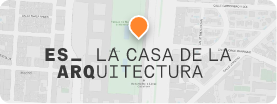
La Arquería de Nuevos Ministerios
Paseo de la Castellana, 67
28046 Madrid - España


Horario
Martes a sábado: de 11 a 20 h.
Domingos y festivos: de 11 a 15 h.
La Arquería de Nuevos Ministerios
Paseo de la Castellana, 67
28046 Madrid - España

Design

Powered by

Copyright © 2026. All rights reserved.